Aunttum: Elegant Script Font for Timeless Branding
Two weeks ago, I was reworking the labels for my friend’s small-batch candle studio—hand-poured soy candles with botanical names like “Lavender & Linen” and “Smoke & Sage.” She’d been using a free script font that looked charming at first glance but fell apart on actual jar stickers: too spindly at small sizes, inconsistent spacing, and zero personality when printed on matte kraft paper. That’s when I swapped in Aunttum. Instant upgrade. Not flashy—just quietly confident, effortlessly legible, and unmistakably *her*. That’s the power of a thoughtfully designed Script Handwritten font.
Aunttum for Product Labels and Handmade Packaging
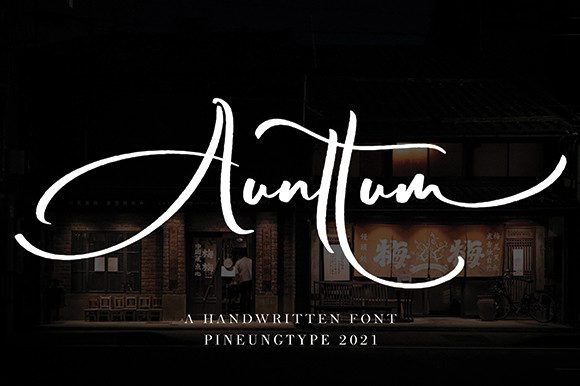
Aunttum is an elegant script font with a contemporary atmosphere and impeccable form, inspired by timeless classic calligraphy—yet it never feels dated or overly formal. What makes it work so well on physical packaging (like candle jars, skincare tubes, or bakery boxes) is its balanced stroke weight: not too thin and not too thick, so it holds up beautifully at 8–12 pt on adhesive labels without fading or crowding. I tested it on uncoated paper, glossy sticker stock, and even embossed foil—each time, the rhythm of the letterforms stayed clear and graceful. As a Fonts choice for handmade sellers, Aunttum adds polish without pretension. It says “crafted with care,” not “designed by committee.”
Aunttum for Café Menus and Local Business Signage
When the neighborhood café down the street refreshed their chalkboard-style menu board and laminated takeout cards, they needed something warm but refined—no shaky handwriting, no overused brush scripts. Aunttum delivered exactly that: a Script Handwritten aesthetic grounded in real calligraphic discipline. Its varied letterforms (notice how the lowercase ‘e’ and ‘a’ have subtle, organic differences) keep the eye moving gently across the page—perfect for listing seasonal lattes or house-made pastries. On digital menu boards or printed flyers, Aunttum remains highly readable at a glance, thanks to generous x-height and open counters. It’s not a display font you’d use for body copy—but as a headline, section divider, or featured item name? Absolutely. Pair it with a clean sans serif like Montserrat or Inter for balance, and suddenly your café feels both inviting and intentional.
Aunttum for Wedding Invitations and Elegant Branding
If you’ve ever held a wedding invitation that felt like a whisper—not loud, not demanding, but deeply personal—you know the emotional lift great typography provides. Aunttum brings that same hushed elegance to any brand leaning into sincerity, craftsmanship, or quiet luxury. Think boutique stationery shops, artisanal soap makers, or independent wedding planners crafting custom mood boards and client welcome kits. Because Aunttum is inspired by timeless classic calligraphy, it carries heritage without stiffness—and because it’s balanced and varied, it avoids the monotony of overly uniform script fonts. Use it for monograms, envelope addressing, or quote graphics on Instagram Stories. Just remember: this is a Fonts asset best reserved for short, meaningful text—names, dates, taglines—not paragraphs.
Aunttum for Social Media Graphics and Online Shop Banners
Scrolling through Instagram or browsing an Etsy shop, people decide in under two seconds whether something feels “worth their attention.” Typography is one of the fastest subconscious cues we process. Aunttum works brilliantly here—not as a full-body font, but as a strategic accent. I used it for the hero banner on a ceramicist’s Shopify homepage (“Hand-thrown in Portland”), overlaid on a soft-focus photo of clay textures. The contrast between raw material and refined lettering created instant cohesion. On mobile thumbnails? Still legible. In Reels captions or Pinterest pins? Distinctive without shouting. As a Script Handwritten option, Aunttum stands out from the sea of generic brush fonts precisely because it’s *not* trendy—it’s considered. Before downloading, check that your version includes OpenType features like ligatures and stylistic alternates; those small details make a big difference in flow and authenticity.
What to Check Before Using Aunttum Commercially
All Fonts meant for business use need careful vetting—and Aunttum is no exception. First, confirm the license covers commercial use (especially for physical products like labels, tags, or merchandise). Next, review included file formats: OTF and TTF are standard, but if you design in Canva or Figma, verify webfont compatibility. Look for multilingual support if your audience spans regions—though for most small businesses in English-speaking markets, Aunttum’s Latin character set covers everything from café names to candle scent descriptions. And always test print samples: what looks perfect on screen may shift subtly on matte paper or shrink-wrap labels. When in doubt, start small—try Aunttum on one product line or a single social series before rolling it across your entire brand identity.
At its core, Aunttum isn’t just another Script Handwritten font. It’s a quiet confidence-builder—a way to say, “I value detail. I respect my customers’ eyes. I want my brand to feel human, not hurried.” Whether you’re hand-lettering thank-you cards, designing a new batch of tea tags, or refreshing your online shop banners, Aunttum gives you elegance with ease, and consistency with soul.